




















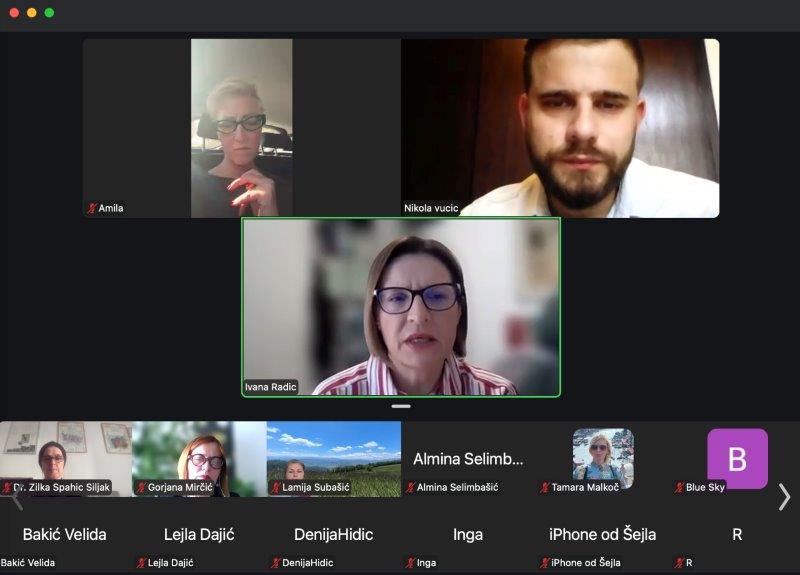
On the occasion of March 8, International Women’s Day, an online panel was held on Friday, March 6, 2026, presenting key misconceptions about the legal and economic aspects of marriage. The panelists Ivana Radić, Amila Mujčinović, and Gorjana Mirčić Čaluković identified the problems but also offered recommendations for improving legal and economic literacy. The panel was moderated by Nikola Vučić.
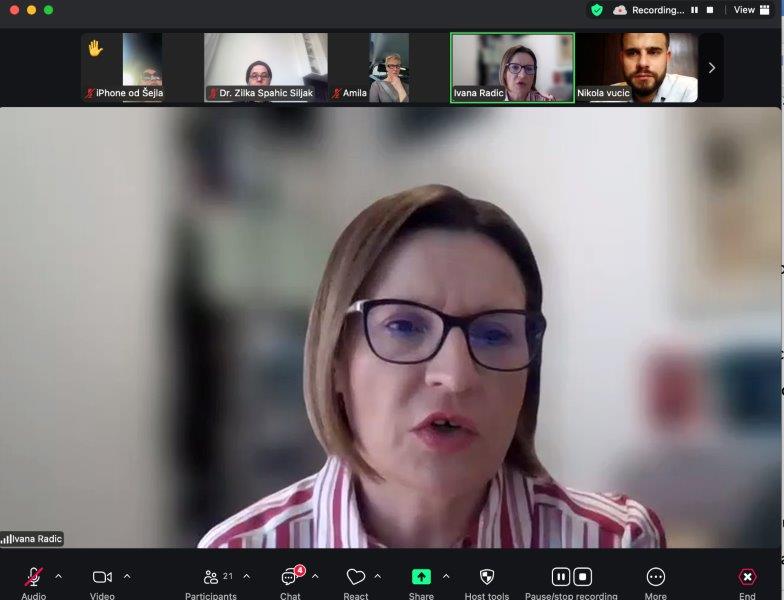
The TPO Foundation, the University Gender Resource Center (UNIGeRC), and the Gender Equality Council of the University of Sarajevo organized this panel to present regional perspectives on economic and legal literacy, which are extremely important, especially during major life turning points.
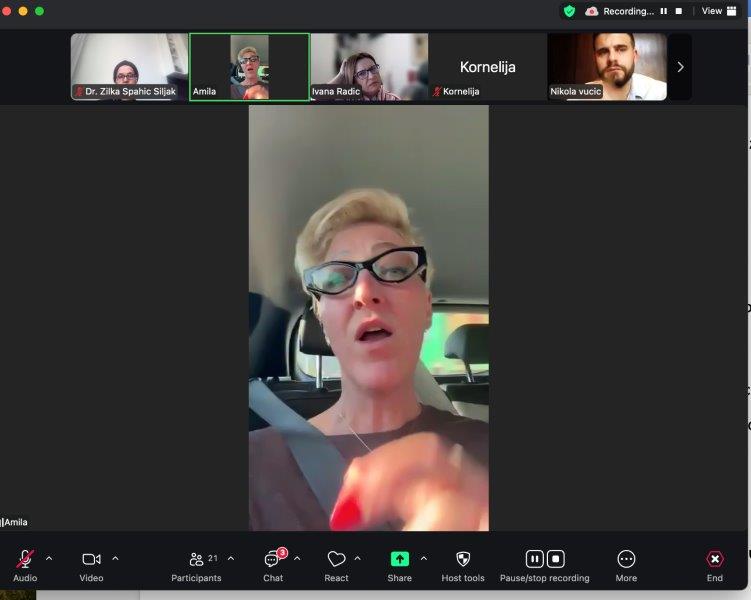
Attorney Dr Amila Mujčinović emphasized that women often have certain misconceptions, including: the expectation that they will receive property immediately after divorce; a lack of awareness that by entering marriage they are effectively investing their own property into someone else’s property; a lack of understanding that marriage involves sharing both rights and obligations, which means sharing loans taken by a partner as well; and a particularly serious issue is the widespread fundamental legal illiteracy. Specifically, it is important to know that in Bosnia and Herzegovina the law stipulates that property is divided equally. Among the most interesting proposals by attorney Amila Mujčinović were: introducing a mandatory one-year period of cohabitation for future spouses (so they can become aware of what marital life entails, the challenges it brings, and how they can deal with them), as well as legally raising the age of majority to 21 instead of the current 18.
Mr. Ivana Radić, a long-time educator working with women, highlighted that financial literacy is extremely important, i.e. in the sense to understand how money functions. First and foremost, it should be understood that financial independence is not only about money. Various life situations illustrate this. Sometimes one partner spends more money on a child. Sometimes one partner earns more and identifies themselves with their income, while overlooking the unpaid household work performed by the other partner. This often leads to problems with self-confidence and a diminished sense of self-worth for the person who performs unpaid domestic labor. For example, out of 1,000 women, only about 3–4 will have a healthy sense of self-worth; despite their abilities, most will have a low perception of their own value.
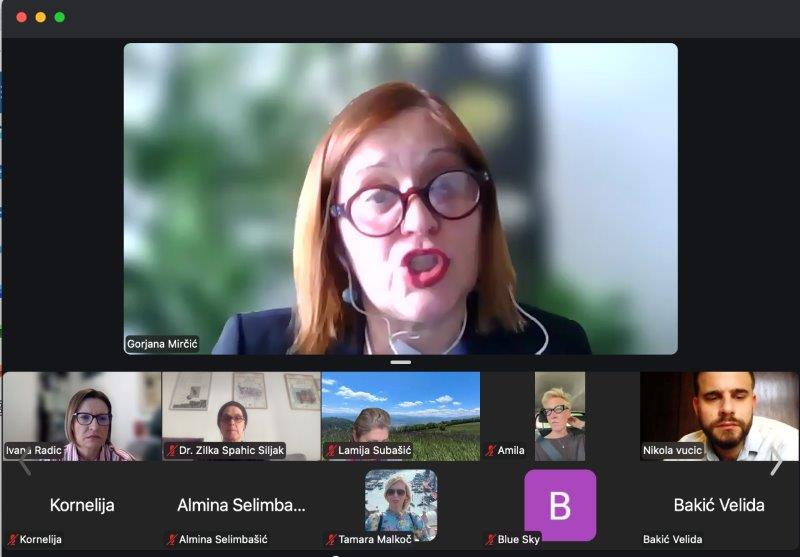
Gorjana Mirčić Čaluković, a legal professional and public prosecutor, began working in this area of law in early 2002, when Domestic violence was introduced as a separate criminal offense in the Criminal Code of the Republic of Serbia. Over the years she continued to advance professionally, acquiring new knowledge and skills in the field of gender-based violence, particularly violence against women. She was a member of the Working Group for drafting the Law on the Prevention of Domestic Violence, as well as the Amendments to the mentioned Law, and the Strategy for the Prevention and Combating of Gender-Based Violence and Violence against Women. As a public prosecutor at the Higher Public Prosecutor’s Office in Belgrade, she served as a coordinator for the prevention of gender-based violence across the entire City of Belgrade. This was a one-year pioneering initiative through which she established a system of protection and support for victims. Gorjana Mirčić Čaluković is also the author of numerous manuals and lectures on this topic, and she currently works at the Judicial Academy.
Given her extensive experience, Gorjana emphasized that women’s economic independence is both an individual issue and a systemic one, as well as a matter of the state’s international obligations, such as those arising from the Istanbul Convention. Unfortunately, it is often only when major life crises occur that the true level of a woman’s economic autonomy becomes visible. Therefore, prior education and financial literacy are important as a form of protection against economic violence, but additional mechanisms of legal and institutional protection are also necessary. Numerous examples from judicial practice confirm this. Another important factor highlighted was the influence of the primary family on shaping a woman’s relationship toward money, work, and inheritance. This foundation can serve as a protective factor in later partnerships. However, it is often set incorrectly, with women expected to renounce inheritance in favor of male family members, to leave the management of their finances entirely to their husbands, and to silently accept to do the unpaid labor.
All panelists agreed that education is key, particularly through the introduction of relevant subjects even in primary schools – given the clear need for knowledge – about essential life skills. Another possibility is more intensive engagement by the non-governmental sector in addressing these important issues.
